Industry guides
How to Reduce No-Shows at Clinics and Med Spas
Short answer
To reduce no-shows, send automated reminders at set times before each appointment, ask patients to confirm by replying, make rescheduling easy, fill canceled slots from a waitlist, and run a polite rebooking sequence for anyone who misses their visit. Keep messages short, use only the personal details you need, and review consent and legal requirements with your advisers.
An empty chair is the most expensive thing in a clinic or med spa. The room, the practitioner and the time are all paid for, but the appointment earns nothing. Some no-shows will always happen. Many can be prevented with a simple, automated reminder system.
Here’s the system I build for clinics and med spas, step by step.
Why do patients miss appointments?
Usually not because they don’t care. Common reasons:
- They forgot, especially if they booked weeks ago.
- Plans changed and canceling felt awkward or difficult.
- They weren’t sure of the details: time, location, what to bring.
- They had second thoughts about cost or treatment and avoided the conversation.
Each of these has an automated fix.
What does a no-show reduction system include?
1. Instant booking confirmation
The moment someone books, they get a confirmation by SMS and email with:
- the clinic name, date and time;
- the address and a map link;
- what to bring or how to prepare (in general terms);
- how to reschedule.
2. Reminders at the right times
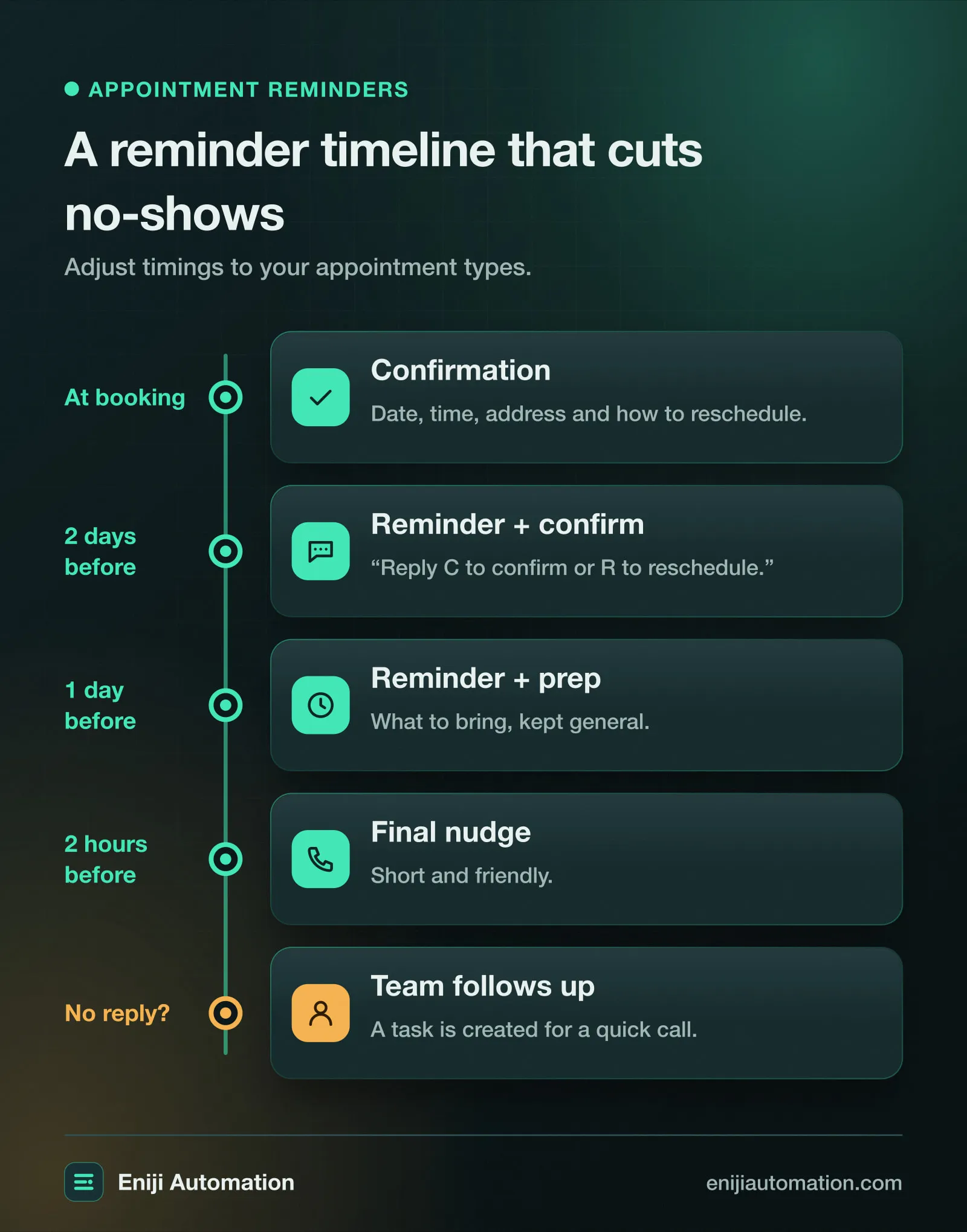
When to send each reminder, and what happens if nobody replies.
A pattern that works well for many clinics:
| When | Channel | Purpose |
|---|---|---|
| At booking | SMS + email | Confirm details |
| 2 days before | SMS | Reminder + ask to confirm |
| 1 day before | SMS or email | Reminder + preparation info |
| 2 hours before | SMS | Short final reminder |
Adjust this to your appointment types. A free consultation booked tomorrow needs fewer reminders than a treatment booked a month ahead.
3. Ask patients to confirm
Ask for a simple reply:
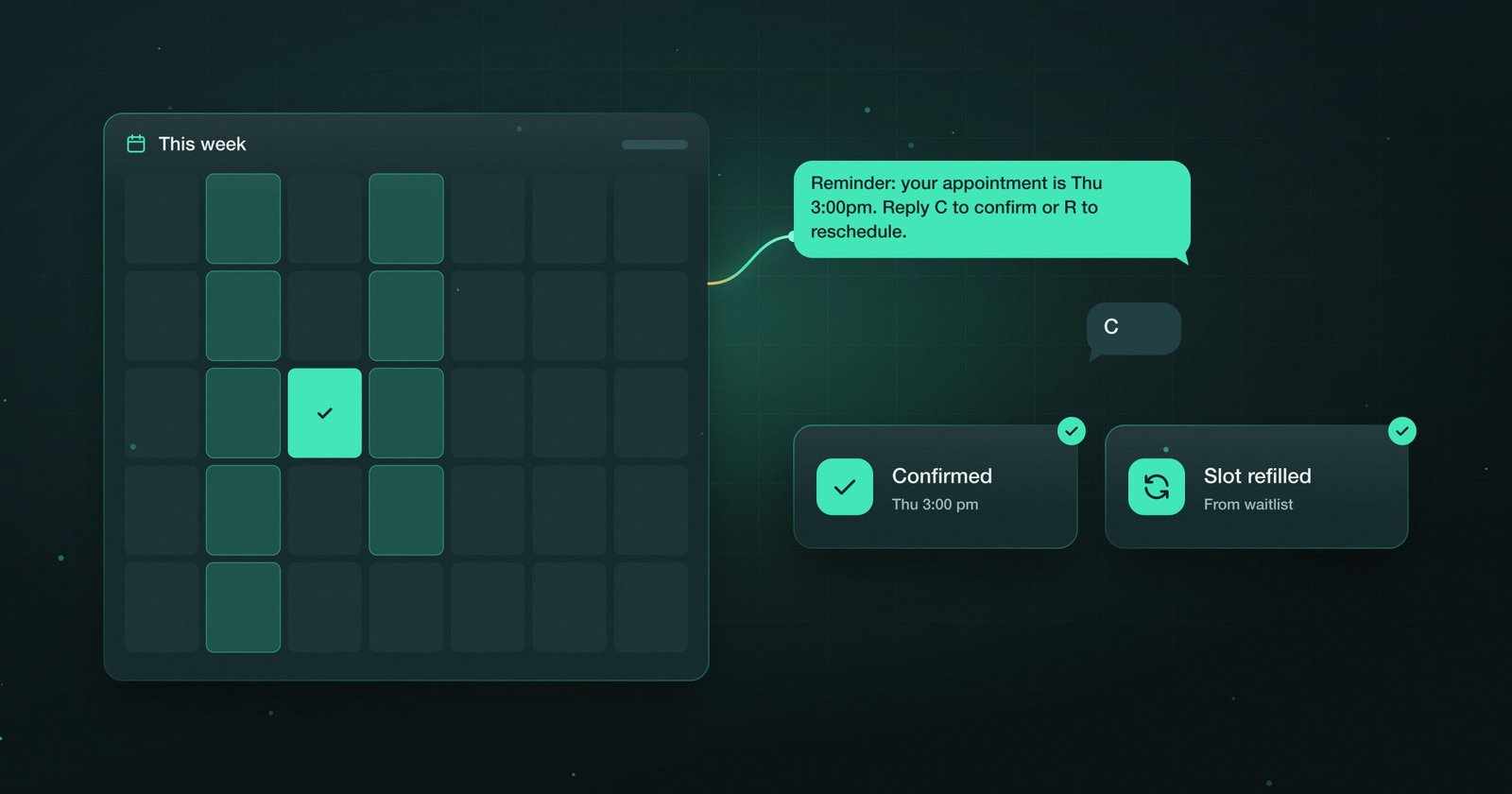
“Hi Alex, this is Glow Clinic. Reminder of your appointment on Thu 14 March at 3:00pm. Reply C to confirm or R to reschedule.”
- C tags the appointment as confirmed.
- R sends a rescheduling link and alerts your front desk.
- No reply after a set time creates a task for your team to call.
4. Make rescheduling easy
People often no-show because canceling feels harder than not turning up. Include a reschedule link in every reminder. A moved appointment is far better than an empty slot.
5. Fill canceled slots from a waitlist
When an appointment is canceled, automatically text people on your waitlist with the free time. First to reply and book gets it.
6. No-show recovery sequence
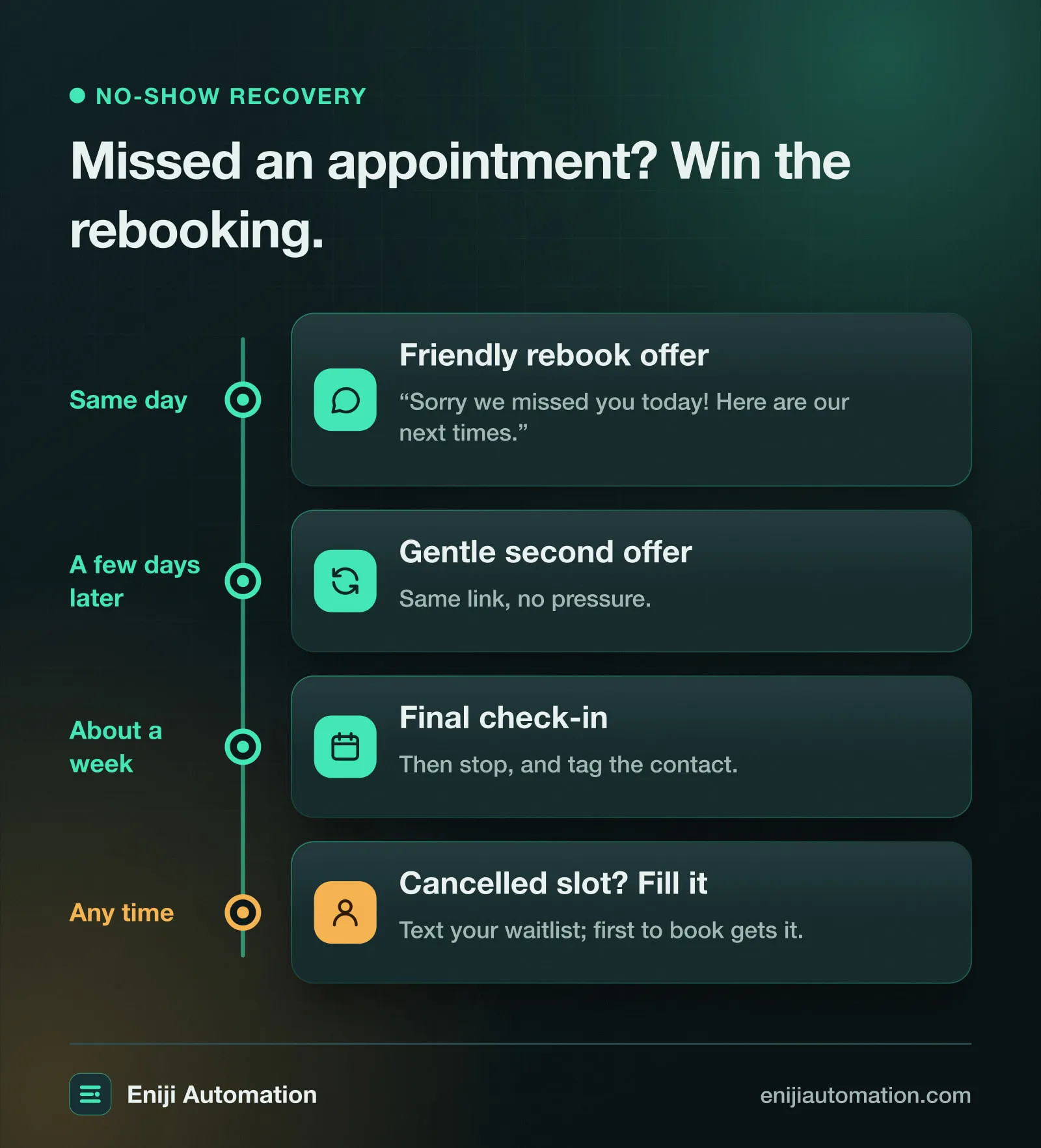
A polite recovery sequence that turns no-shows into rebookings.
If someone does miss their appointment:
- Same day: “Sorry we missed you today! Would you like to rebook? Here are our next times: [link]”
- A few days later: a gentle second offer.
- About a week later: a final check-in, then stop.
Tag the contact so your team sees the history. For repeat no-shows, you might apply your deposit or cancellation policy, set by you.
7. Speed-to-lead for new inquiries
Many lost bookings happen before the first appointment exists. New inquiries from ads, your website and social media should get a reply within seconds, with a link to book. An AI receptionist can also answer calls when your front desk is busy with patients. See what an AI receptionist can and can’t do.
How do you keep messages privacy-conscious?
Health and wellness businesses need extra care with personal data:
- Keep SMS content general. Clinic name, date and time. Avoid treatment names or health details by text where possible.
- Collect only what you need in forms and the CRM.
- Limit access to patient records to the staff who need it.
- Record consent to receive texts and emails, and honour opt-outs straight away.
- Review your legal requirements. Depending on where you operate, health privacy laws, data protection rules (such as POPIA or GDPR) and SMS rules may apply. These should be reviewed with you and your qualified advisers before launch.
I don’t claim HIPAA compliance or certification for any setup. I build privacy-conscious systems and work with your advisers on what your business requires.
How do you measure results?
Track these in your CRM before and after:
- No-show rate (missed appointments ÷ booked appointments);
- Confirmation rate on reminders;
- Slots refilled from the waitlist;
- No-shows rebooked by the recovery sequence.
Measure your own starting point first. Your numbers are the ones that matter.
Want this set up for your clinic?
Reminders, confirmation handling and no-show recovery are part of our GoHighLevel CRM setup, and an AI receptionist can answer and rebook calls 24/7. Book a 15-minute demo and we’ll map your booking flow together.