Industry guides
Roofing Estimate Follow-Up: A Simple System for Busy Crews
Short answer
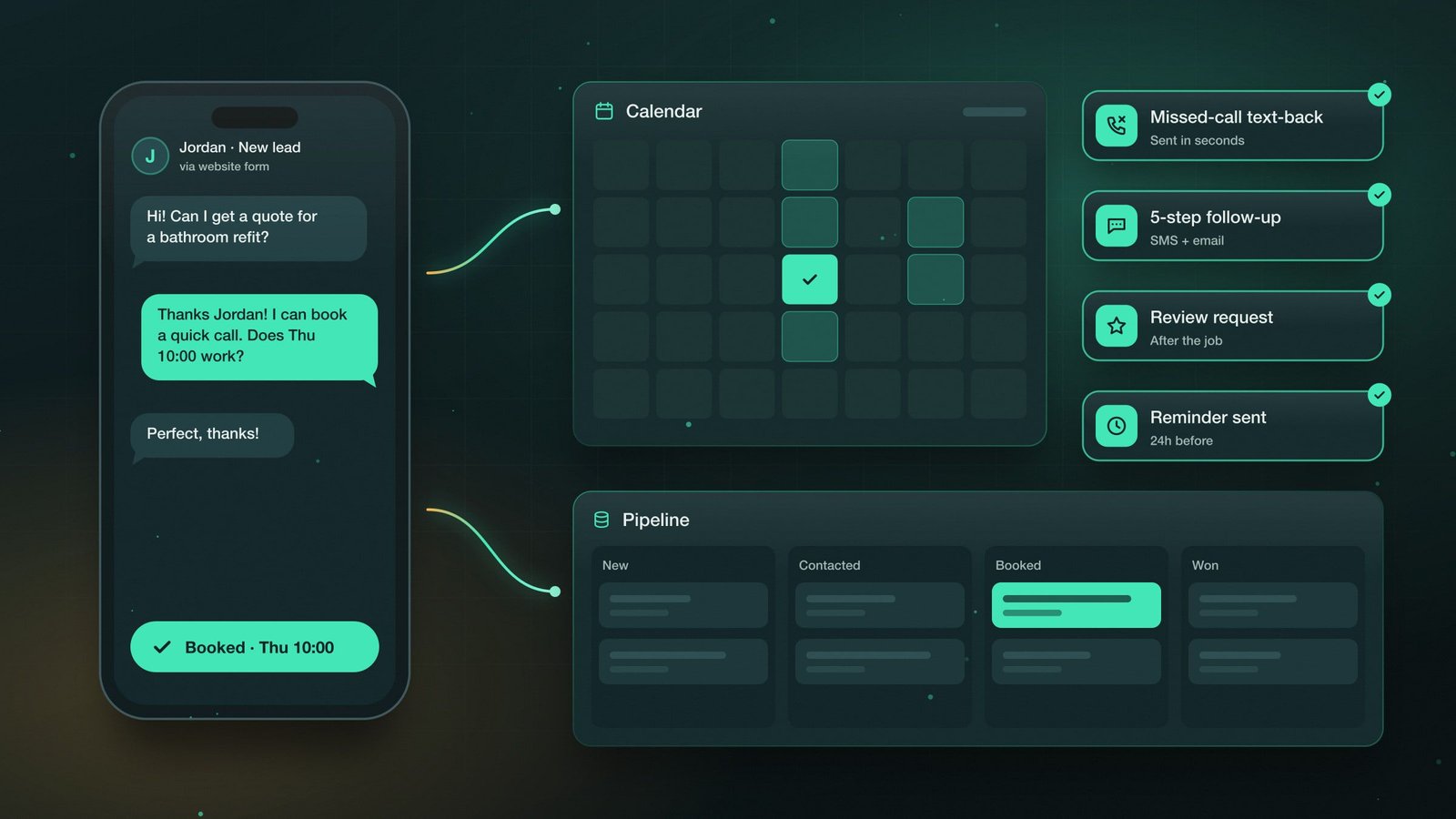
The simplest roofing estimate follow-up is a short, planned sequence of texts and emails sent over two to three weeks after the estimate: a same-day thank-you, a check-in a few days later, a useful reminder about warranty, financing or scheduling, and a final message before closing the lead. Automate it in your CRM and stop it as soon as the homeowner replies or signs.
Roof replacements are big decisions. Homeowners get several estimates, talk it over, check their insurance and often go quiet. The company that stays in touch, politely and consistently, gives itself the best chance of winning the job.
The problem is time. Your crews are on roofs, your estimators are out measuring, and nobody has an hour a day to chase estimates. Here’s a simple follow-up system that runs on its own.
Why do roofing estimates go cold?
Usually not because the homeowner chose someone else. More often:
- They’re busy and the decision slips down the list.
- They’re waiting on insurance or a spouse or a second estimate.
- They have a question but don’t want to call and feel “sold to”.
- Nobody followed up, so the conversation just stopped.
A few well-timed messages solve most of these.
A simple follow-up sequence
Here’s an example sequence. Adjust the timing and wording to your business.
| When | Channel | Message |
|---|---|---|
| Same day | Thank you, the estimate attached, and a short summary of what’s included | |
| Day 2 | Text | “Any questions about the estimate? Happy to walk through it.” |
| Day 5 | Something useful: warranty details, materials, photos of similar jobs or financing options | |
| Day 10 | Text | A friendly check-in, plus your current scheduling availability |
| Day 21 | Text or email | A final check: “Should I keep this open, or close it out for now?” |
After the last message, move the homeowner to a slower nurture list: a seasonal check-in or a storm-season reminder. Don’t delete them.
What should follow-up messages say?
Good follow-up is short, personal and helpful:
- Use names. “Hi Sam, it’s Alex from ABC Roofing” beats “Dear customer”.
- Make it easy to reply. Ask one simple question.
- Add something useful. A warranty explanation or a financing option gives them a reason to read.
- Skip the pressure. Fake deadlines and “price goes up tomorrow” damage trust.
When should follow-up stop?
Always stop the sequence when the homeowner:
- replies, so a person can take over the conversation;
- books a meeting or signs;
- says no or asks you to stop.
Automated messages that keep going after someone replies are the fastest way to annoy a good lead.
What about storm season?
After hail or high winds, call volume jumps overnight and follow-up is often the first thing to slip. Two things help:
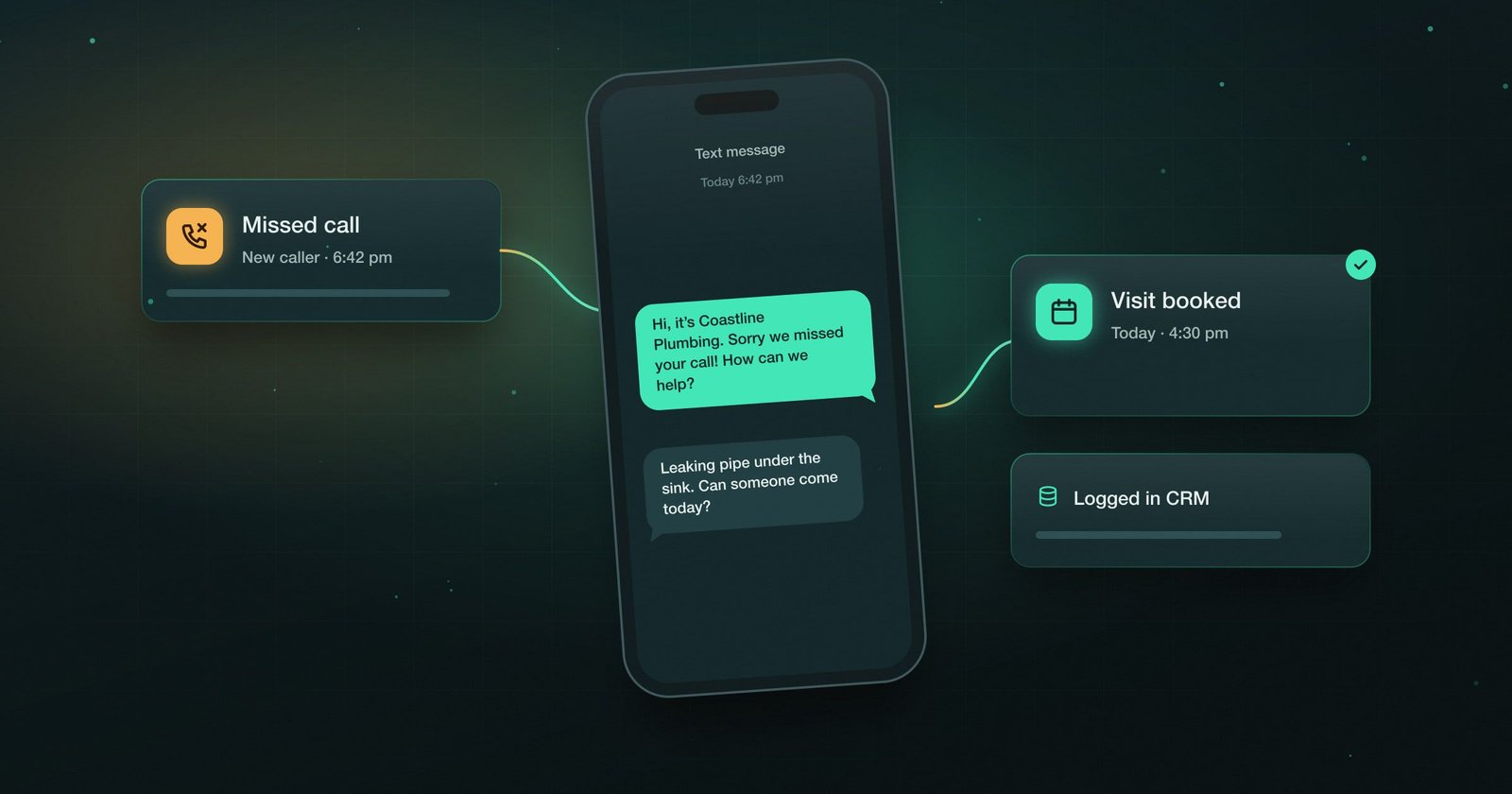
- Answer every call so new inspection requests don’t ring out. An AI receptionist for roofing companies can answer every call and book inspections while your team is on roofs.
- Let the follow-up run on its own so estimates from last week don’t go cold while you’re chasing this week’s leads.
Be careful with insurance claims. Explain what you do, such as inspections and documentation, but don’t give claim advice or make promises about what insurance will pay.
Texting rules to know
In the US, business texting needs the customer’s consent and A2P 10DLC registration with the carriers. Only text people who agreed to receive texts, and always honor STOP replies. Read A2P 10DLC registration explained for the details.
How to automate it
In a CRM like GoHighLevel, the setup is simple:
- Create a pipeline stage called “Estimate sent”.
- Start a workflow when a lead enters that stage, with the messages and waits from the table above.
- Stop the workflow on any reply, or when the lead moves to “Won” or “Lost”.
- Notify the estimator when a homeowner replies, so they can respond personally.
We set this up as part of our GoHighLevel CRM service, and it’s included in every plan. Want to see it working for a roofing company? Book a 15-minute demo.