Industry guides
How Plumbers Can Handle After-Hours Emergency Calls
Short answer
To handle after-hours emergency calls, a plumbing company needs three things: a clear list of what counts as an emergency, an on-call plumber who receives those calls, and a way to answer every call instantly, by an answering service or an AI receptionist. Routine calls should be booked for the next day, and every caller should get a text confirming what happens next.
A burst pipe at 11pm is one of the most valuable calls a plumbing company can get. The homeowner needs help now, and they’ll call plumbers until one answers. If your phone goes to voicemail, that job, and often that customer for years, goes to someone else.
Here’s a simple system for handling after-hours emergency calls without burning out your team.
Step 1: Decide what counts as an emergency
Start with a written list. It keeps everyone consistent, whether a person or an AI answers the phone.
Usually an emergency:
- burst pipes and active leaks;
- sewer backups and overflowing toilets;
- no water to the home;
- water heater leaking onto the floor;
- gas line concerns (the caller should leave the home and call 911 or the gas utility first).
Usually not an emergency:
- slow drains and minor clogs;
- dripping faucets and running toilets;
- water heater replacement quotes;
- remodel and repipe estimates.
Adjust the list to your business and your service area. Some companies treat “no hot water” as urgent in winter, for example.
Step 2: Set up an on-call rotation
Someone needs to receive the emergency calls. Keep it simple:
- One on-call plumber per night or week, on a shared calendar.
- A backup person if the on-call plumber doesn’t answer within a few minutes.
- Clear rules for dispatch: when to go out tonight, and when to book the first slot in the morning.
Step 3: Make sure every call is answered
This is where most companies fall down. You have four main options:
- Voicemail. Free, but many callers won’t leave a message. They just call the next plumber.
- Forward to your cell phone. Better, but you’ll get every call, including the routine ones that could wait.
- A live answering service. People take messages and can follow a script. Check whether they can transfer emergencies and book jobs.
- An AI receptionist. A voice agent answers every call instantly, follows your emergency rules, transfers urgent calls and books routine ones.
We compare options 3 and 4 in detail in AI answering service vs live answering service.
Step 4: Use a short, calm script
Whoever answers, the call should go something like this:
- Greet and identify the problem. “What’s happening right now?”
- Check for safety. Is water near electrical outlets? Is there a gas smell?
- Give one simple safety step you approve. For example, “If you can, turn off the main water shutoff valve.”
- Get the address and a callback number.
- Transfer to the on-call plumber, or set a clear expectation: “Our on-call plumber will call you within 15 minutes.”
Never let whoever answers diagnose the problem or quote a price you haven’t approved.
Step 5: Text the customer what happens next
A short text after the call reassures the customer and stops them calling your competitors:
“Thanks for calling ABC Plumbing. Our on-call plumber has your details and will call you shortly. If water is still flowing, turn off the main shutoff valve.”
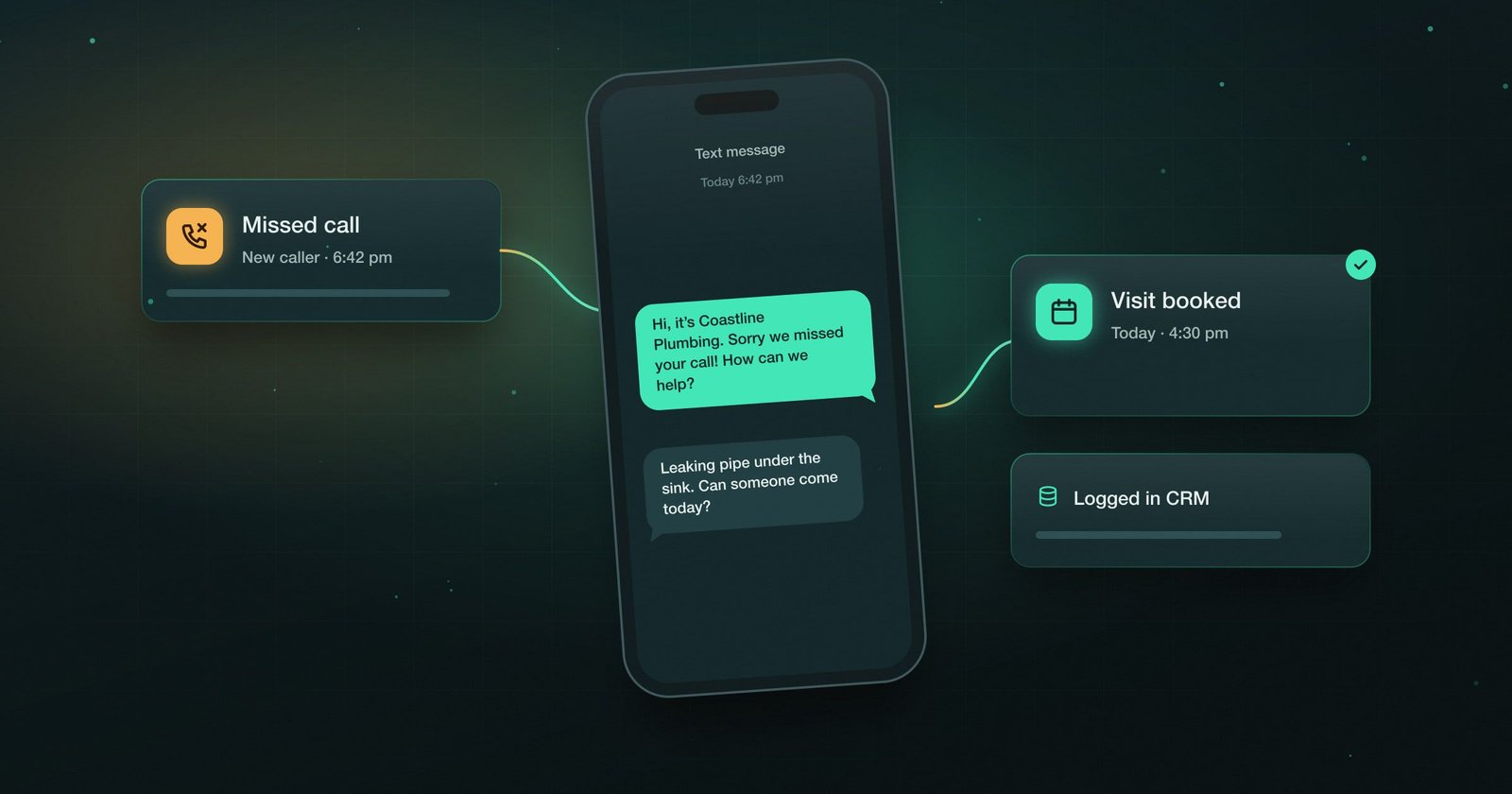
Missed calls should get a text too. Read how missed-call text-back works for a simple setup.
Step 6: Follow up the next morning
- Book routine calls from the night into the first open slots.
- Call back anyone who didn’t get through.
- Check every emergency job was invoiced and the customer was asked for a review.
When all of this lives in one CRM, nothing slips through the cracks.
How an AI receptionist fits in
An AI receptionist can run steps 3 to 6 for you: it answers every call, follows your emergency list, transfers urgent calls to the on-call plumber, texts the customer, books routine jobs into your calendar and logs every call in your CRM.
See how it works for plumbing companies, or book a 15-minute demo and we’ll walk through your after-hours setup with you.